Are You Ready For Guided Meditations & Healing Practices with Tavia Rising?


Anxiety in the Body: When Your Body Holds What Your Mind Can't Explain
Sometimes anxiety isn't a thought. It's a feeling somewhere in your body.
Have you ever felt anxious without knowing exactly what you're worried about?
Perhaps there's a tightness in your chest.
A knot in your stomach that won't seem to settle.
Your shoulders are tense, even when you're trying to relax.
Your jaw is clenched without you realising it.
Or your legs feel restless, as though your body is preparing to run somewhere, even when there's nowhere you need to go.
Sometimes the physical sensations arrive before you recognise any anxious thoughts.
And sometimes they remain long after the stressful moment has passed.
You might tell yourself that everything is fine.
That you have nothing to worry about.
That you should be able to relax.
Yet your body seems to be telling a different story.
Welcome to Anxiety in the Body, a six-part guided meditation series created by Tavia Rising at Meditation Central.
Through gentle relaxation, hypnosis-inspired guidance and sensory-rich visualisation, these journeys invite you to explore common areas of physical tension with greater awareness and compassion.
You don't have to force your body to relax.
You don't have to understand every sensation.
And you don't have to feel perfectly calm before you begin.
Sometimes the first step is simply noticing what your body is experiencing.
Explore Guided Meditations


Meditation Collections

Find the Meditation You Need
Anxiety can be experienced differently from one person to another.
Some people notice tension in their chest or stomach. Others experience tight muscles, jaw clenching or a restless urge to move.
Each meditation explores a different part of the body through gentle awareness and symbolic visualisation.
Choose the journey that feels most relevant to you.

Episode 1
The Tightness in Your Chest. A Guided Meditation for Anxiety & Chest Tension
For feeling physically tense, noticing shallow breathing or experiencing a sense of pressure around the chest.
Have you ever noticed your chest becoming tight when you're worried?
Perhaps you feel as though you're holding your breath.
Your shoulders rise.
Your breathing feels less comfortable.
Or you become increasingly aware of every sensation in your chest.
Anxiety can affect breathing patterns and muscle tension, although chest symptoms can have many causes and should not automatically be attributed to anxiety.
In this guided meditation, you're invited to imagine a gentle golden light surrounding the chest.
Rather than forcing the area to open or demanding a particular breathing pattern, the imagery offers an opportunity to notice sensations with patience.
The journey encourages comfortable breathing, relaxation and a compassionate response to physical tension.
You can allow yourself to soften without trying to control every sensation.
Reflection: Can I notice how my chest feels without immediately demanding that the feeling change?
Affirmation: I give myself permission to breathe comfortably and gently.


Episode 2
The Knot in Your Stomach. Calming Anxiety & Digestive Tension
For an unsettled stomach, nervous anticipation and feeling physically uneasy when you're worried.
Do you ever experience a knot in your stomach before something important?
Perhaps you're anticipating a difficult conversation.
Waiting for news.
Or worrying about a situation you can't control.
You might feel butterflies, nausea or a sense of tightness around your abdomen.
The digestive system and nervous system communicate with one another, which helps explain why stress and anxiety can sometimes be accompanied by digestive sensations.
But stomach symptoms can also have other causes.
This meditation invites you to imagine a gentle river of light flowing through a peaceful landscape.
As the river moves, you're encouraged to explore a sense of softness and spaciousness around the abdomen.
The imagery is symbolic, offering an opportunity to approach uncomfortable sensations without fighting against them.
You don't need to force the knot to disappear.
You can begin by allowing your body a moment of care.
Reflection: What happens when I respond to discomfort with patience rather than frustration?
Affirmation: I can meet this feeling with gentleness.

Episode 3
The Weight on Your Shoulders. Letting Go of Stress & Responsibility
For shoulder tension, emotional overwhelm and feeling that you're carrying too much.
Do your shoulders sometimes feel as though they're holding the weight of the world?
Perhaps you're the person everyone relies on.
You anticipate problems.
Take care of responsibilities.
And keep going even when you're exhausted.
You may notice your shoulders becoming tense during stressful moments, or discover that you've been holding them tightly without realising it.
This guided meditation invites you into a symbolic landscape where you're carrying a collection of stones.
Each stone represents a responsibility, expectation or concern that has been occupying your attention.
As the journey unfolds, you're invited to consider which burdens genuinely need your care and which can be set aside for now.
The imagery gradually transforms from heaviness towards a feeling of lightness, symbolised by wings.
The meditation isn't about abandoning the people or responsibilities that matter to you.
It's about exploring whether you can care deeply without carrying everything at once.
Reflection: Which responsibilities are mine to manage, and which have I been carrying unnecessarily?
Affirmation: I can care without carrying everything.


Episode 4
The Tension in Your Jaw. A Meditation for Clenching & Stress
For jaw tension, unconscious clenching and difficulty physically relaxing.
Have you ever realised that you've been clenching your jaw without noticing?
Perhaps you're concentrating.
Worrying.
Holding back frustration.
Or moving through a demanding day.
Sometimes muscle tension becomes so familiar that we don't recognise it until we pause.
Stress can contribute to jaw clenching in some people, although dental conditions and other factors may also be involved.
In this guided meditation, you're invited to imagine a peaceful pool of cool blue water.
The gentle imagery offers a way to bring awareness to the muscles around your face, jaw and neck.
Rather than forcing your mouth open or stretching the jaw, you're encouraged to notice whether you're holding unnecessary tension and allow comfortable relaxation where possible.
The journey explores the possibility of releasing effort without placing more demands on your body.
Reflection: Where am I holding tension that I hadn't noticed before?
Affirmation: I can soften without forcing myself to relax.

Episode 5
The Ache in Your Back. A Guided Meditation for Stress & Physical Tension
For back tension, feeling physically burdened and struggling to unwind after stressful days.
Does your back sometimes feel heavy or uncomfortable after a demanding day?
Perhaps you've been sitting for long periods.
Holding tension through your muscles.
Or finding it difficult to settle into a comfortable position.
Back discomfort has many possible causes, including muscular, postural and medical factors. Stress may contribute to muscle tension, but not every backache is caused by anxiety.
This guided meditation invites you to imagine a peaceful natural landscape where your spine is symbolically supported by the earth.
Gentle roots extend from the imagined base of your spine into the ground beneath you.
Through calming imagery, you're encouraged to explore feelings of support, stability and physical awareness.
The intention isn't to manipulate your spine or promise pain relief.
It's to provide an opportunity for relaxation and a more compassionate relationship with your body.
You can rest without needing to hold yourself together through constant effort.
Reflection: What helps me feel physically and emotionally supported?
Affirmation: I am allowed to rest and receive support.


Episode 6
The Restlessness in Your Legs. Finding Grounding When Your Body Won't Settle
For physical restlessness, nervous energy and feeling unable to sit still.
Do you ever feel as though your body wants to move even when your mind is asking for rest?
Perhaps your legs feel restless.
You find yourself tapping your feet.
Changing positions.
Or feeling an uncomfortable urge to get up and do something.
Anxiety can sometimes be accompanied by restlessness, but persistent leg symptoms may also have other explanations, including restless legs syndrome, medication effects or other health conditions.
This guided meditation invites you into a peaceful meadow where a gentle pathway stretches into the distance.
You're encouraged to imagine moving along the path at a comfortable pace, noticing the ground beneath your feet and the surrounding landscape.
The journey explores the possibility of grounding yourself through awareness rather than demanding complete stillness.
You don't have to fight the urge to move.
And you don't have to remain motionless to meditate.
Sometimes a sense of steadiness begins with allowing your body to move in a way that feels comfortable.
Reflection: What does my body need right now, movement, rest or simply a little more patience?
Affirmation: I can find steadiness in my own way.


Understanding Physical Anxiety
Anxiety can involve physical sensations because the body's stress response affects breathing, muscle tension, heart rate, digestion and alertness.
When your brain perceives a possible threat, your body may prepare to respond.
This can involve changes in the autonomic nervous system and the release of stress-related hormones.
You may notice sensations such as:
-
Muscle tension or tightness.
-
A racing heartbeat.
-
Changes in breathing.
-
An unsettled stomach.
-
Sweating or trembling.
-
Restlessness or difficulty settling.
-
Feeling unusually alert or physically uncomfortable.
These sensations can occur alongside worried thoughts, but they may also be noticeable before you consciously identify a particular concern.
Importantly, physical symptoms aren't always caused by anxiety.
Chest discomfort, persistent digestive symptoms, back pain and restlessness can have many explanations.
A medical assessment is appropriate for new, persistent or concerning symptoms.
Understanding the connection between stress and physical sensations can be helpful, but it shouldn't replace investigating symptoms that need medical attention.
The Mind-Body Connection
Can Your Body Feel Anxious Even When Your Mind Feels Calm?
Yes, some people notice physical tension or discomfort even when they aren't consciously worrying.
You might be concentrating on a task while your shoulders remain tense.
Trying to relax while your jaw stays clenched.
Or feeling physically restless without identifying a particular anxious thought.
There are several possible reasons for these experiences.
Stress can affect muscle tension and patterns of physical alertness.
Habits, posture, sleep, exercise and other health factors can also influence how the body feels.
Sometimes we become so accustomed to certain physical sensations that we stop noticing them until we slow down.
Mindfulness can offer an opportunity to develop greater awareness of these experiences.
Instead of immediately judging the sensation, you can begin by asking:
What am I noticing in my body right now?
Does anything feel tense or uncomfortable?
Would changing my position, taking a break or moving gently help?
Is this a symptom that needs medical attention?
You don't have to interpret every sensation as an emotional message.
And you don't have to find a psychological explanation for every physical experience.
Sometimes awareness is simply awareness.

How Meditation May Help
Meditation and relaxation practices may help some people manage anxiety symptoms, reduce perceived stress and develop greater awareness of physical sensations.
Mindfulness involves paying attention to present-moment experiences, including thoughts, feelings and bodily sensations, without immediately judging them.
Some guided meditations also incorporate body scans, in which attention moves gently through different areas of the body.
At Meditation Central, we combine relaxation with sensory-rich visualisation.
Golden light offers a symbol of comfort around the chest.
A river of light represents gentle movement through the abdomen.
Stones and wings invite reflection on the responsibilities we carry.
Cool blue water becomes an image for jaw relaxation.
Roots symbolise support through the back.
And a meadow pathway offers a way to explore grounding and movement.
These images are creative metaphors.
They aren't literal treatments for physical symptoms or guarantees that tension or pain will disappear.
Instead, they offer an opportunity to notice sensations, practise relaxation and approach the body with greater compassion.
You don't need to force your body into calm. You can begin by listening to it with care.
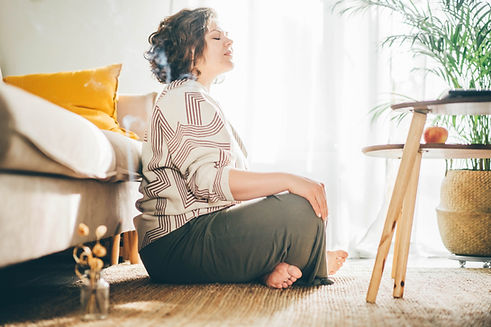

A Gentle Body-Awareness Practice
A Five-Minute Grounding Meditation for Anxiety in the Body
If you're feeling physically tense or unsettled, this brief practice may offer a place to begin.
Choose a comfortable, safe position.
You can sit, lie down or stand.
Keep your eyes open if you prefer.
1. Notice Your Support
Feel your feet touching the floor.
Or notice the chair or bed supporting your body.
Allow yourself to become aware of the space around you.
2. Let Your Breathing Remain Comfortable
Notice your natural breathing rhythm.
You don't need to take unusually deep breaths.
Simply allow your breath to move in a way that feels easy.
3. Gently Notice Your Body
Bring your attention towards your shoulders.
Your jaw.
Your hands.
Your stomach.
Your legs.
You don't need to scan every area.
Just notice whether any part of your body is asking for attention.
4. Respond With Kindness
If you notice tension, consider whether a comfortable change of position or gentle movement might help.
You don't need to force a release.
If focusing on bodily sensations makes you more anxious, return your attention to something outside yourself, such as a sound or an object in the room.
5. Return to the Present
Notice three things you can see.
Two sounds you can hear.
And one point of contact between your body and the surface supporting you.
Remind yourself:
I can notice what my body is experiencing without needing to control every sensation.
When you're ready, continue with your day.
How To Use the Series
You don't need previous meditation experience to begin.
Choose the area that feels most relevant.
You might select the shoulder meditation after a demanding day or the jaw meditation when you notice clenching.
Find a comfortable position.
There's no requirement to sit perfectly upright or remain motionless.
Avoid forcing physical changes.
Don't strain your breathing, stretch into pain or attempt to manipulate uncomfortable areas.
Follow the imagery in your own way.
You can picture the scene, focus on the narration or simply listen.
Remain in control.
You can keep your eyes open, move, pause or stop whenever you wish.
Use meditation as support, not diagnosis.
Physical symptoms deserve appropriate medical assessment when needed.
Give yourself permission to respond differently each time.
Some days you may feel more relaxed. Other days you may simply become more aware of what you're experiencing.
Both are valid.

Frequently Asked Questions
Frequently Asked Questions About Anxiety in the Body
Health Information & Further Reading: Health Direct Australia I NCCIH

About Your Meditation Guide
Meet Tavia Rising. The Voice Behind Meditation Central
I'm Tavia Rising, creator and meditation guide at Meditation Central.
My own experience with anxiety taught me that stress isn't always something we experience through thoughts alone.
During years of working long days in the financial markets, I became accustomed to constant pressure, responsibility and the feeling that I always needed to remain alert.
I know how exhausting it can be when your mind is trying to keep going, but your body feels overwhelmed.
Meditation became one meaningful part of how I learned to slow down and develop a more compassionate relationship with myself.
It helped me begin noticing when I was tense, when I needed rest and when I was placing unnecessary pressure on myself.
That's part of the inspiration behind Anxiety in the Body.
I wanted to create guided journeys that acknowledge how physical anxiety can feel, while offering a gentle space for relaxation, awareness and self-compassion.
My hope is that these meditations encourage you to treat your body with patience rather than frustration.
Your body doesn't have to feel perfect to deserve care.
Continue Your Journey
Explore More Guided Meditations for Anxiety & Emotional Wellbeing


Your Body Deserves Compassion, Not Another Demand
You don't have to force your shoulders to relax.
You don't have to fight every uncomfortable sensation.
You don't have to understand exactly why you're feeling tense.
And you don't have to achieve perfect stillness to experience a meaningful moment of rest.
Your body is part of your experience.
It deserves attention, care and appropriate support.
Sometimes the most helpful thing you can do is stop demanding that it feel different immediately.
Notice.
Breathe comfortably.
Move gently if you need to.
And give yourself permission to begin again.
You can meet your body with kindness, one moment at a time.
With warmth,
Tavia Rising
Meditation Central

By subscribing to our mailing list, you consent to receive emails from Meditation Central regarding updates, promotions, and other relevant information. We value your privacy and handle your personal data in accordance with our Privacy Policy.
You can unsubscribe at any time by clicking the "Unsubscribe" link provided in our emails.


